





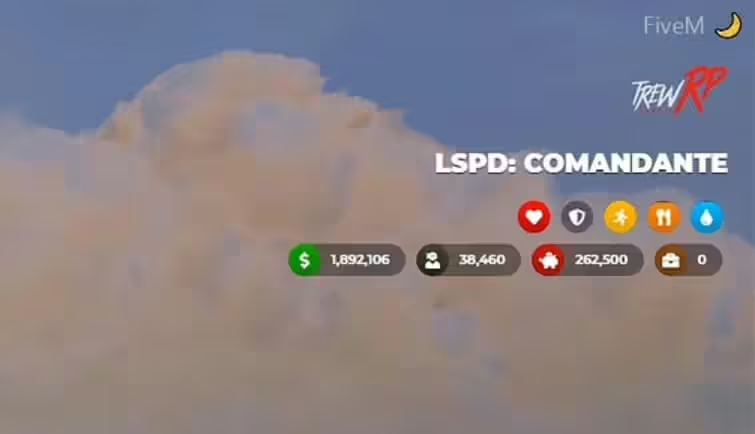
Trew HUD UI is vortisrd’s discontinued interface for ESX and vRP variants. The original repository contains ESX, VRP, VRP2 and VRPEX folders; it does not contain a QBCore edition. A community conversion must be evaluated as a separate fork. This article refers to the original project, whose ESX manifest declares version 1.3.0.
Choose one framework folder
Copy the trew_hud_ui folder from the appropriate framework directory into server resources, then start it after its dependencies. The ESX version imports es_extended/locale.lua and uses the old esx:getSharedObject event. Its README also lists esx_society and esx_addonaccount. Check those APIs against your installed ESX version instead of assuming current Legacy support.
Configure the features you actually use
Hunger and thirst read esx_status; disable those displays if their provider is absent. Society money uses an esx_society callback. Configure fuel and voice against your installed resources: the original voice code calls NetworkSetTalkerProximity, so a modern voice integration is not established by the HUD name. Avoid blindly replacing framework files with the old README snippets.
Customize and test the display
The reviewed ESX config sets Config.Locale to br, despite the README saying en. Configure the logo, language, units and Config.ui options from the delivered file. createStatus adds a visual indicator and setStatus updates its value; neither export creates a stress system. The /toggleui command hides job and money elements rather than every HUD element.
Keep the original demo as a historical preview. Test character loading, job changes, account values, needs, vehicle controls and your voice system on a separate server. The repository carries GPL-3.0; preserve its license when distributing a derivative. No maintained QBCore package or unchanged compatibility with current frameworks was verified.